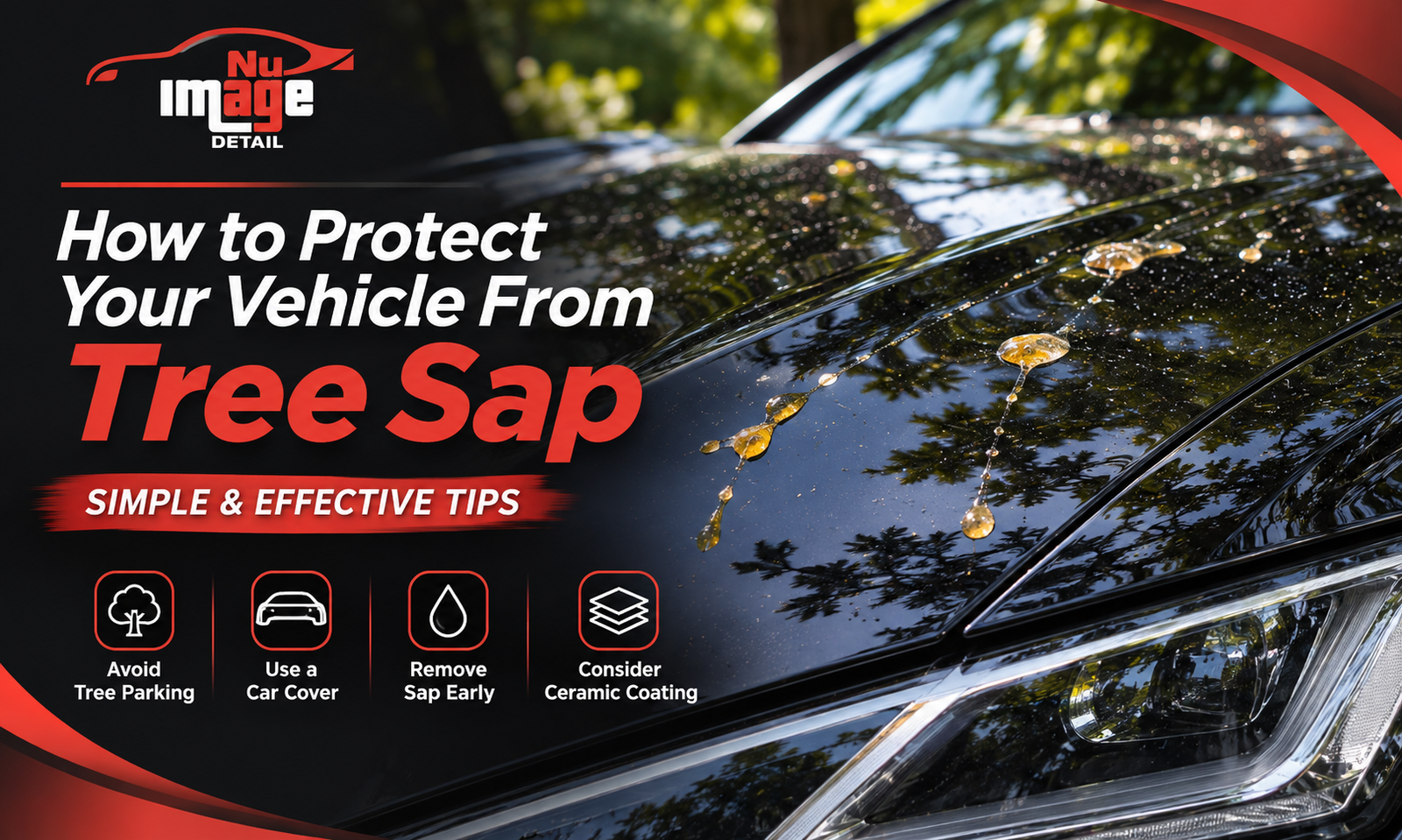
Parking under a beautiful shade tree might seem like a good way to keep your vehicle cool, especially during hot summer days. However, tree sap can quickly turn that convenient parking spot into a paint protection problem.
Tree sap is sticky, difficult to remove once hardened, and can leave stubborn marks on your vehicle’s clear coat. When exposed to sunlight and heat, it can become even harder to clean and may eventually cause permanent paint damage.
The good news? With a few simple precautions and proper car care, you can protect your vehicle from tree sap and maintain its beautiful finish.
Here are seven practical tips every vehicle owner should know.
Why Is Tree Sap Bad for Your Car’s Paint?
Tree sap contains natural sugars and resinous substances that can stick firmly to automotive paint. When left on the surface, hardened sap can become difficult to remove and may contribute to clear coat staining or etching.
Hot weather makes the problem worse because heat can cause sap to harden and bond more stubbornly to the paint.
The longer you leave it untreated, the greater the risk of permanent marks that may require professional paint correction.
7 Tips to Protect Your Car From Tree Sap
1. Avoid Parking Directly Under Trees
The easiest way to prevent tree sap damage is to avoid parking beneath trees whenever possible.
Pine, maple, oak, and other trees can release sticky substances that land on your vehicle. Even if you cannot see sap dripping, small deposits can accumulate on the hood, roof, windshield, and trunk.
Whenever possible, choose a covered parking area, garage, or open parking space away from overhanging branches.
2. Use a Quality Car Cover
If you regularly park outdoors, a properly fitted car cover can provide an additional layer of protection.
Choose a breathable, vehicle-specific cover that fits securely and is designed for outdoor use. Make sure your vehicle is clean before putting the cover on because trapped dirt can cause scratches when the fabric moves against the paint.
A good car cover can help protect against tree sap, bird droppings, dust, and other environmental contaminants.
3. Remove Tree Sap as Soon as Possible
Found sticky spots on your hood or roof? Do not wait until your next scheduled car wash.
Fresh tree sap is generally easier to remove than hardened deposits. Start by rinsing the affected area and using warm water with automotive shampoo and a clean microfiber towel.
For stubborn spots, use a dedicated automotive tree sap remover according to the manufacturer’s instructions.
Avoid scraping, picking, or aggressively rubbing the sap because this can scratch your vehicle’s clear coat.
4. Consider Professional Ceramic Coating
Ceramic coating is a great option for drivers who want easier vehicle maintenance and additional paint protection.
A professionally applied ceramic coating creates a protective surface that helps repel water, dirt, and certain environmental contaminants. Its slick surface can also make cleaning tree sap easier.
However, ceramic coating does not make your vehicle completely resistant to tree sap or chemical etching. Contaminants should still be removed promptly.
5. Wash Your Vehicle Regularly
Regular washing helps prevent dirt, pollen, and other contaminants from building up on your vehicle.
Use a pH-neutral automotive shampoo, a clean microfiber wash mitt, and proper washing techniques.
Pay particular attention to the hood, roof, windshield, and trunk because these surfaces are commonly exposed to falling tree sap.
If you notice sticky deposits during your wash, address them with an appropriate removal product rather than trying to scrub them away.
6. Inspect Your Vehicle After Outdoor Parking
Make it a habit to inspect your vehicle after parking beneath trees or spending extended periods outdoors.
Check the following areas:
- Hood and front fenders.
- Roof and sunroof.
- Windshield and windows.
- Trunk and rear glass.
- Side mirrors.
Finding tree sap early can save you time, money, and unnecessary paint correction work.
7. Get Professional Paint Care When Needed
Sometimes tree sap stays on a vehicle for too long, leaving cloudy spots, stains, or visible marks even after the contamination has been removed.
In these situations, professional detailing may be necessary.
A trained detailer can inspect the paint, safely remove remaining contamination, and determine whether polishing or paint correction is needed to restore the finish.
Professional paint care can help bring back your vehicle’s gloss without unnecessary damage to the clear coat.
Does Ceramic Coating Prevent Tree Sap Damage?
Ceramic coating provides an additional protective layer that makes vehicle surfaces more hydrophobic and easier to clean.
It can reduce how strongly certain contaminants adhere to the surface, but it does not guarantee protection against prolonged tree sap exposure.
| Protection Option | Helps With Tree Sap? | Main Benefit |
|---|---|---|
| Regular Wax | Yes | Temporary surface protection |
| Ceramic Coating | Yes | Easier cleaning and added chemical resistance |
| Paint Protection Film (PPF) | Yes | Physical barrier protecting covered paint |
| Car Cover | Yes | Prevents direct exposure when properly fitted |
| Regular Washing | Yes | Removes fresh contaminants before they build up |
The right option depends on your parking habits, vehicle condition, and long-term protection goals.
Keep Your Vehicle’s Paint Looking Its Best With Nu Image Detail
Tree sap might seem like a minor inconvenience, but leaving it untreated can lead to expensive paint repairs.
At Nu Image Detail, we understand how important it is to maintain your vehicle’s appearance. Our professional services include exterior detailing, paint correction, ceramic coating, and Paint Protection Film installation.
Whether your vehicle needs a thorough exterior cleaning, paint enhancement, or long-term protection, our team focuses on professional workmanship and attention to detail.
We proudly serve vehicle owners in Virginia Beach and surrounding communities.
Ready to give your vehicle the protection it deserves?
Contact Nu Image Detail at (757) 689-8091 or visit nuimagedetail.com to explore our professional detailing and paint protection services.
Frequently Asked Questions
1. Can tree sap permanently damage car paint?
Yes. Tree sap left on automotive paint for extended periods can contribute to clear coat staining and etching, especially in hot weather.
2. What is the safest way to remove tree sap from a car?
Wash away loose dirt first, soften fresh sap with warm water and automotive shampoo, and use a dedicated automotive sap remover for stubborn deposits. Always follow product instructions.
3. Does ceramic coating protect against tree sap?
Ceramic coating can make contaminants easier to remove and provide some chemical resistance. However, it does not make paint completely immune to tree sap damage.
4. How quickly should I remove tree sap from my vehicle?
As soon as reasonably possible. Fresh sap is usually easier to remove, while hardened deposits can become more difficult to clean and may leave paint defects.
5. Can paint correction remove tree sap stains?
Paint correction may improve or remove certain surface-level etching and marks after the sap has been safely removed. However, deeper clear coat damage may require more extensive repair.
6. Is Paint Protection Film better than ceramic coating against tree sap?
PPF provides a physical barrier over covered panels, while ceramic coating provides a thin protective surface layer. Both have benefits, but neither makes a vehicle completely immune to tree sap damage.